



Stand-Up Weed Puller
For gardeners who feel it the next day
“I know of nothing that will put my back out faster than weeding.”
Then stop bending. You can pull the whole root standing up.
- 90-Day Guarantee
- Free US Shipping
- Telescoping Handle
Say Goodbye to Bending Over
Weeding is the chore nobody loves but it doesn't have to hurt. The Stand-Up Weed Puller lets you tackle even the most stubborn weeds from a fully upright position, protecting your back and knees while keeping your garden pristine.
Powerful, Effortless, Satisfying
- Long steel handle keeps you standing tall — no more crouching or kneeling
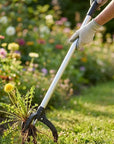
- Foot-pedal action drives the claws deep into the root for a clean, complete pull
- Removes roots entirely so weeds don't grow back as quickly
- Works on most weed types — dandelions, thistles, crabgrass, and more
- Durable steel construction built to handle season after season of garden use
Spend less time fighting weeds and more time enjoying the garden you've worked so hard to grow.
No More Bending or Kneeling
Say goodbye to back pain and sore knees. Our Stand Up Weed Puller lets you remove weeds from a standing position, protecting your back and joints while you garden.
Key Benefits:
- Eliminates bending and kneeling
- Ergonomic handle reduces strain on your back
- Effortless weed removal with foot pedal operation
- Lightweight and easy to maneuver
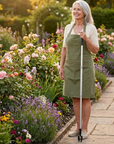
- Perfect for seniors and anyone with mobility concerns
Built to Last
Specifications:
- Material: Durable steel construction with comfort grip handle
- Handle Height: 36 inches (adjustable)
- Weight: 3.5 lbs—light enough to use all day
- Operation: Foot pedal trigger for easy weed extraction
- Works on most soil types
- Minimal maintenance required
Designed for durability and ease of use, this tool makes garden maintenance enjoyable again.
The math nobody does
Pull one weed and it's nothing. Now pull three hundred.
The load
4×
The pressure on your lower spinal discs when you bend with straight legs, versus standing. Swedish and German researchers measured it with sensors placed inside the discs of living volunteers.
300
Weeds on an ordinary Saturday morning. Bend, grab, pull, straighten. Three hundred repetitions, at four times the load, through the same soft tissue.
That is not an injury. That is a repetition problem. Which is why the pain never shows up while you are gardening.
The bill arrives that night
One evening last spring, after a full day of weeding, a gardener walked into her kitchen and bent down to feed her cats.
She could not straighten back up. Not "it hurt to straighten up." Could not. She lowered herself flat onto the kitchen floor, caught her breath, and wiggled across the room to the cupboards, because she needed something solid to pull herself up with.
She was not injured in the garden. She was injured by the garden, six hours later, in her own kitchen.
Every tool in your shed makes it worse
A hand fork. A hori hori. A dandelion digger. A pair of gloves. Every one of them is very good at pulling a weed, and every one of them requires you to be down there, folded in half, to do it.
The Arthritis Foundation does not tell gardeners with joint pain to stop gardening. It tells them to use long-handled tools that let you stand instead of stoop. That is not our marketing. That is their guidance.
And a clinical physical therapist at Newton-Wellesley Hospital, describing her own weekend in her own garden, said out loud what every gardener over sixty already knows: it's going to cost me for two weeks.
If a physical therapist cannot pace herself out there, neither can you. The answer was never discipline.
Stop bending
Your tools do not need to pull better. You need to stop getting down there.
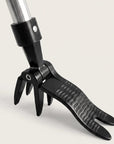
A four-claw head at the end of a telescoping steel shaft. You stand upright, you step, you tilt. The weed comes out whole. Your back never enters the equation.
Three hundred bends a Saturday, at four times the load. Or zero.
That is the entire decision.
Sources: Wilke et al., "New in vivo measurements of pressures in the intervertebral disc in daily life," Spine, 1999 · Nachemson, "The Effect of Forward Leaning on Lumbar Intradiscal Pressure," Acta Orthopaedica Scandinavica, 1965 · Arthritis Foundation, Gardening with Arthritis · NPR / Newton-Wellesley Hospital
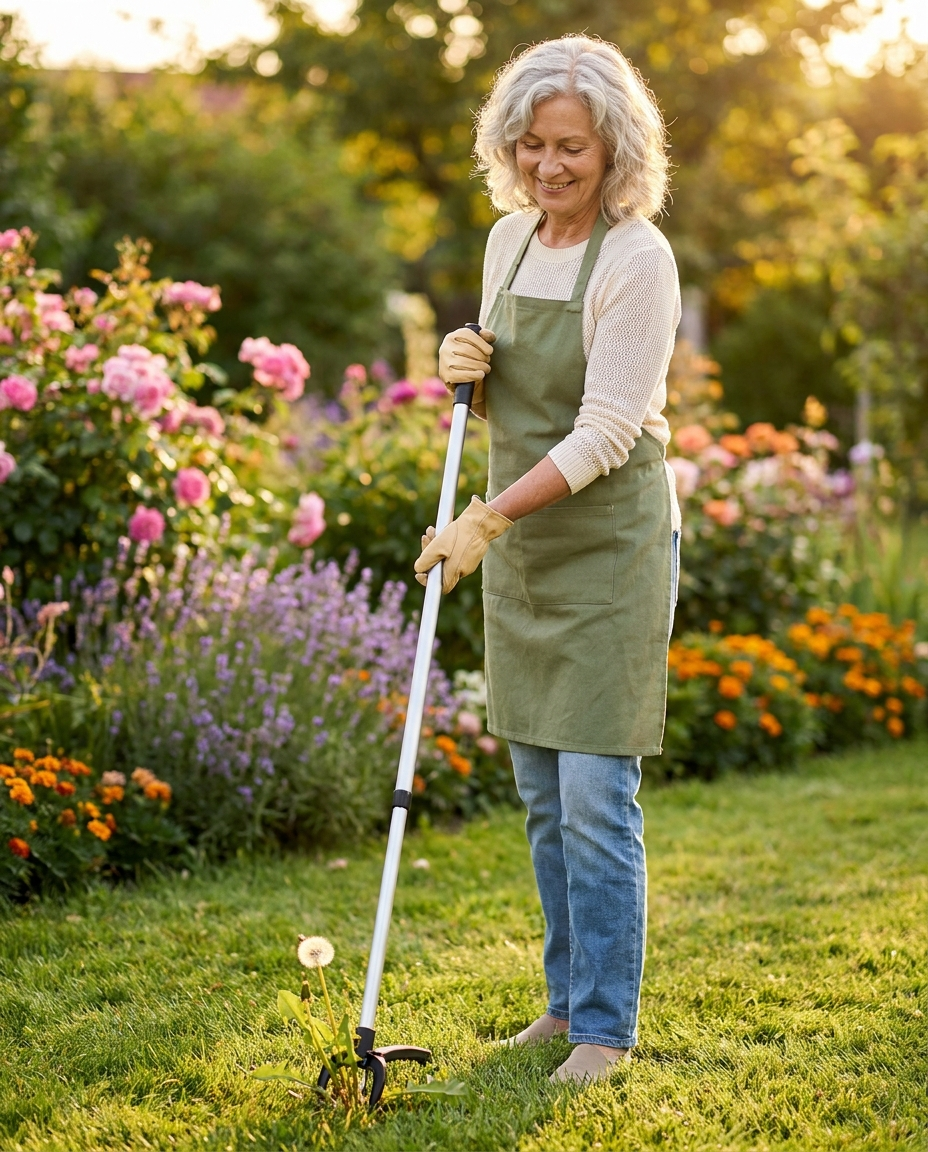
THE HANDLE NOBODY ELSE ADJUSTS
Set it to your height. Not the other way around.
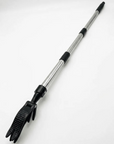
Every stand-up weeder on the market comes at one fixed length. If you are 5 foot 3, the popular one fits you beautifully. If you are 5 foot 9, you are still hunched over, which is the exact thing you bought it to stop doing.Ours telescopes. You set it once, to you, and you never bend again.
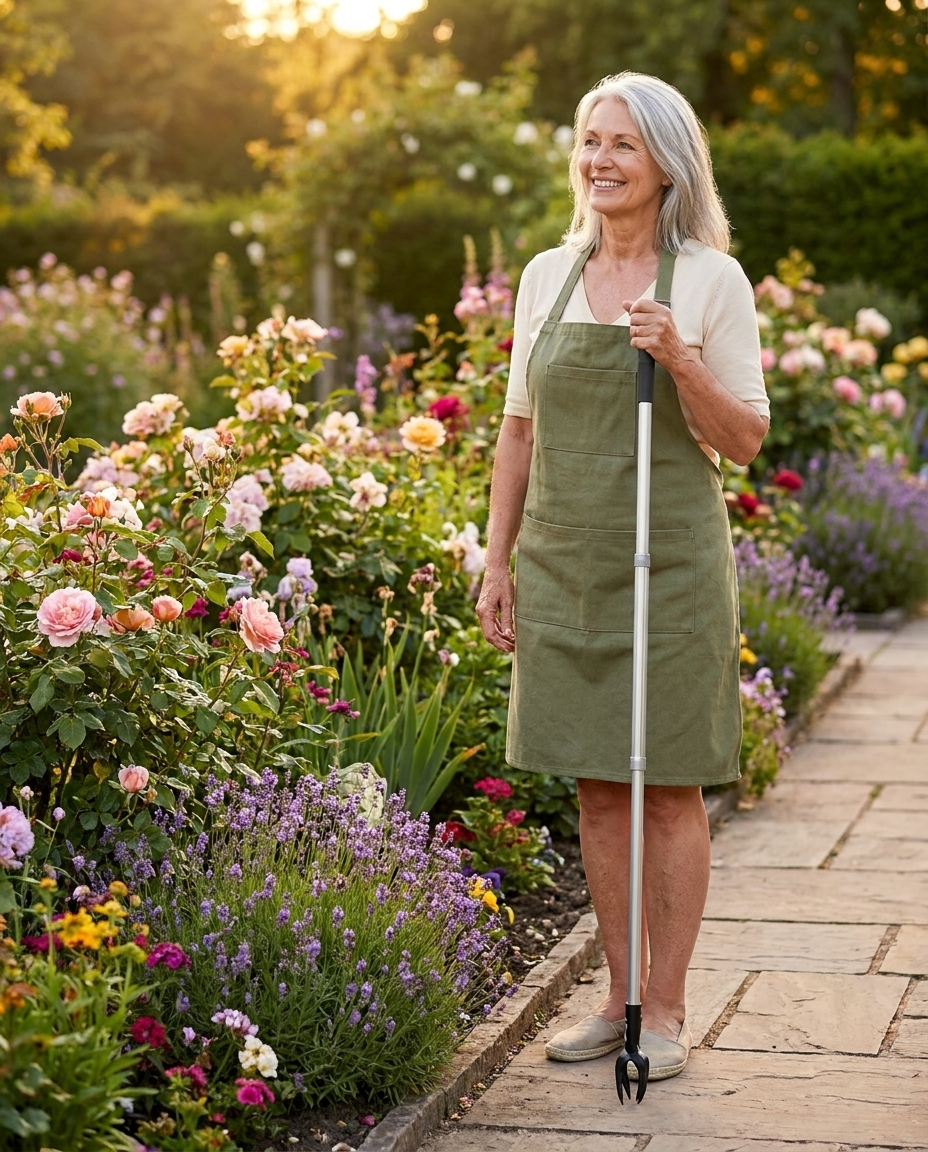
NOT A NEW INVENTION
The stand-up weeder is older than the problem.
The first one was patented in Seattle in 1913. Production stopped in 1941, when every scrap of metal in the country went to the war, and nobody built one again for fifty-eight years.It was not invented for a trend. It was invented back when people expected to work standing up, and expected a tool to last a lifetime.This is not a gadget. It is a rediscovery.
See why gardeners choose Granny Garden
NOT ALL WEEDERS ARE EQUAL

Granny Garden
Long steel shaft — no bending
4-claw head grabs the whole root
Foot-press pedal — your weight does the work
One-touch eject
All-metal build
vs
Other Brands
Fixed-length handle — fits one height, hunches everyone else
Claws that snap the root and leave half in the ground
Plastic shaft that flexes under load
No honest word about clay, mud, or technique
Machine wash only
THE PERFECT GIFT FOR THE GARDENER YOU LOVE
-
USED EVERY DAY
Not a gadget that ends up in a drawer she'll grab it every time she heads out to the garden.
-
NO MORE BENDING
She pulls every weed standing tall, no kneeling, no strain on her back.
-
READY TO GIFT
Perfect for Mother's Day, a birthday, or "just because" simple and easy to wrap.

Before you order
What this weeder will NOT do
Every brand in this category implies their tool works everywhere. It doesn't. Not ours, not theirs. Here is exactly where this one struggles, so you can decide before the box arrives instead of after.
It will not work in bone-dry, hard-packed soil. The claws cannot reach full depth, so the root snaps at the point of most resistance and the bottom half stays in the ground. This is not a flaw in our tool. It is physics, and it is true of every stand-up weeder ever made. The hundred-year-old market leader admits the same thing in its own product listing. The fix: water the spot first, or pull the day after rain. Sixty seconds with a watering can and it works.
Too wet and the claws clog. A product tester tried it right after a soaking rain and packed the head solid with mud. Damp is what you want. Not dry, not soaked. Damp.
You tilt. You do not lift. Almost everyone gets this wrong on the first try, including professional reviewers. Push the claws in, then tilt the handle back like a lever. The claws close around the root and it comes up whole. Lift straight up and the weed will stay in the ground and you will think the tool is broken. It isn't. It's leverage.
Taproots yes. Dense clumps no. Dandelions, plantain, thistle, anything with one main root: this is what it was built for. Established day lilies or a thick mat of grass? Get a spade. One gardener put it perfectly: he still had to shovel the lilies.
It leaves a small hole. You are removing a root from the ground, so yes, there is a divot. Step on it and it closes. If you want a weeder that removes a taproot without disturbing the soil, that tool does not exist.
If any of that gives you pause, we would rather you know now. And if it arrives and it is not right for you, that is what the 90 days are for.
Frequently Asked Questions
Push the claw around the weed stem, press the foot pedal to drive it into the ground, then pull the handle back to eject the root — no bending required.
It works best on moist or loose soil. For hard clay or dry ground, water the area first to soften the soil before use.
It's designed for deep-rooted weeds like dandelions, thistles, and dock. The claws grip the root and pull it out whole to prevent regrowth.
Yes. The telescoping handle adjusts from 90 to 120 cm so you stand fully upright. No kneeling, no stooping — just pull and eject.
Rinse the claws with water after use and dry before storing. The tool is rust-resistant and can be stored upright in a shed or garage.
Yes. The claw head is precise enough to target weeds growing between paving stones, tiles, or gravel without disturbing the surface.
One last thing
You were never bad at weeding. You were doing it folded in half.
Three hundred times a Saturday, at four times the load, for how many years now. Nobody told you that was the problem. They just sold you a better trowel.
The weeds are not going anywhere. Neither are you. The only thing that has to change is the shape you make while you pull them.
Gardeners do not quit. They adapt. As one lifelong gardener puts it: there is always another way to get something done.
This is the other way. Stand up. Step. Tilt. Move on to the next one, and go to bed that night without paying for it.
This isn't giving in. It's refusing to stop.